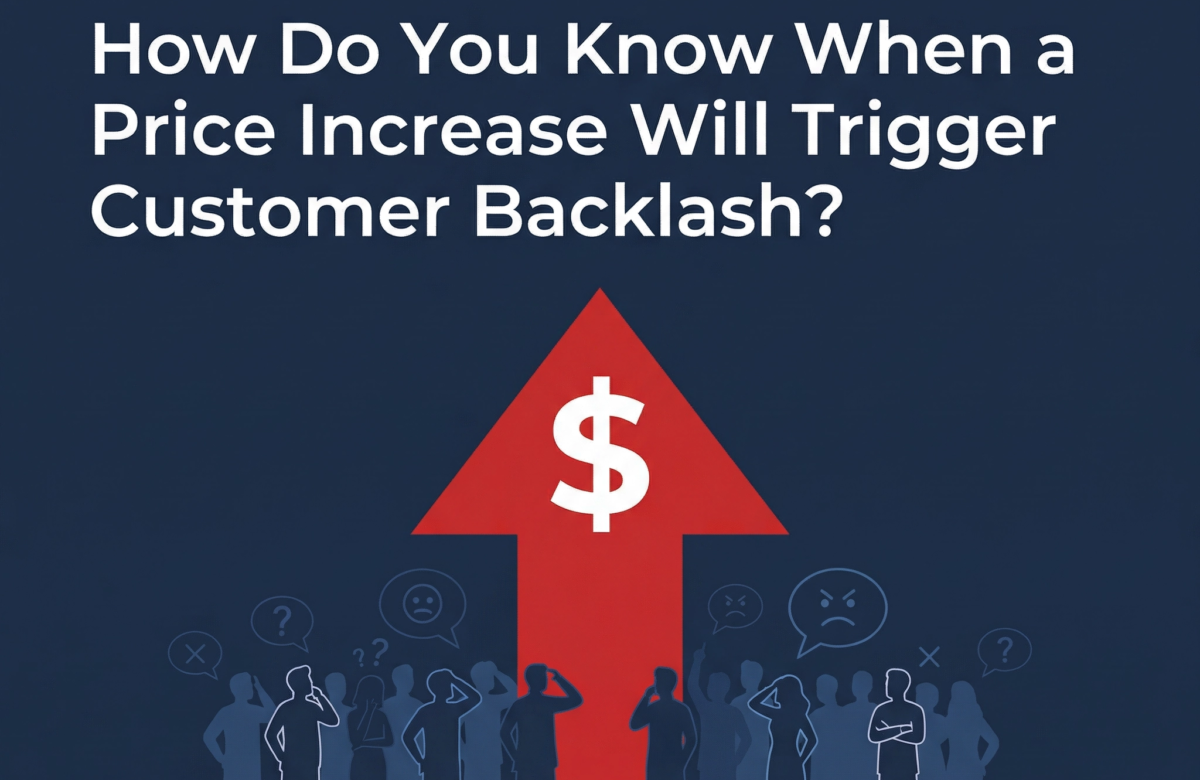
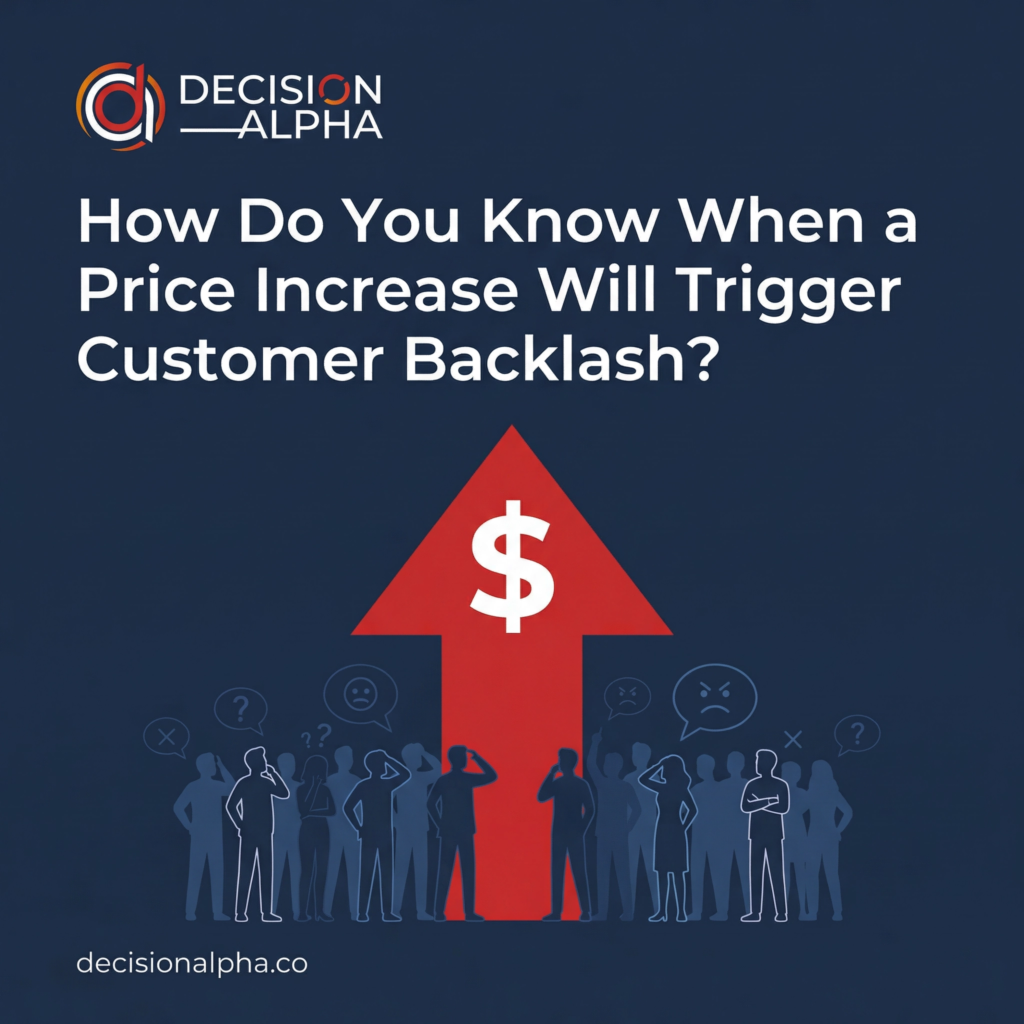
When Will a Price Increase Trigger Backlash? Customers do not track your prices as precisely as you think they do. A price increase will only trigger backlash when it crosses a psychological threshold, not when it simply goes up by a few dollars. Most businesses underprice because they assume any increase will cause churn, but behavioral economics shows that customers operate within acceptable price ranges. The key to raising prices safely is understanding where the upper limit of that acceptable range sits for your specific category.
Think about buying a tube of toothpaste. You know roughly what it should cost—somewhere between $2 and $5. If your usual brand goes from $3.50 to $3.80, you probably won’t even notice, and you certainly won’t abandon the brand. But if that same tube suddenly costs $18, you immediately pause and look for alternatives. The $18 price tag crossed a psychological threshold. Your service or software has the exact same dynamic; you just have to find where the $18 line is.
Why Customers Don’t Know What They Pay (And What That Means for You)
In one of the most cited studies in pricing psychology, marketing professors Peter Dickson and Alan Sawyer intercepted 802 shoppers in a major supermarket chain within thirty seconds of them placing an item in their cart. They asked one simple question: “Can you tell me the price of the item you just put in your cart?”
The results were striking. One in five shoppers (21.1%) could not even offer a guess. Less than half (47.1%) could state the correct exact price. And the recalled price was on average 10 cents lower than the actual price. For items that were on sale, price knowledge was even worse: only 42% of shoppers hazarded a guess about the discount, and they were off by 47% on average.
The conclusion: most customers are not good at recalling prices of items they have just purchased, and a significant number have no idea at all.
This matters enormously for pricing decisions. As a founder or pricing leader, you look at your pricing page every day. You know every tier and every decimal point. You assume your customers are paying the same level of attention. They are not. They are making a rough judgment about whether the price feels fair relative to the value they are getting, and that judgment is far less precise than you fear.
The Anatomy of a Price Backlash
When backlash does happen, it is rarely because of the math. It happens because of the framing. Customers revolt when a price increase feels like a violation of trust or when it pushes the product into a new, more expensive mental category without delivering new value.
Here is how you test the waters before rolling out a change:
1.Map the Monetization Zones: Identify the lowest price that signals quality and the highest price that feels fair. Your current price is likely sitting comfortably in the middle. You have room to move up before hitting the ceiling.
2.Segment by Use Case, Not Demographics: Power users will tolerate a higher threshold than casual users because the product is more deeply embedded in their workflow. Do not apply a blanket increase if your user base has vastly different value equations.
3.Frame the Increase Around Value: Never justify a price increase by citing your own rising costs. Customers do not care about your costs; they care about their outcomes. Frame the increase around the continued investment in the product and the value it delivers to them.
Grandfathering and The Psychology of Fairness
If you are terrified of churning your existing base, use grandfathering. Lock in your current customers at their existing rate for a set period (e.g., 12 months) and roll out the new pricing only to new customers.
This does two things. First, it immediately tests the new price point in the market without risking your current recurring revenue. Second, it makes your existing customers feel valued and protected, which builds loyalty rather than resentment.
FAQ
What is an acceptable price range?
An acceptable price range is the band between the lowest price a customer will pay before doubting the product’s quality, and the highest price they will pay before feeling ripped off.
An acceptable price range is the band between the lowest price a customer will pay before doubting the product’s quality, and the highest price they will pay before feeling ripped off.
How much can I raise prices without losing customers?
It depends on your category, but behavioral research suggests that increases of 5% to 10% rarely trigger significant churn if the product is embedded in the customer’s routine.
It depends on your category, but behavioral research suggests that increases of 5% to 10% rarely trigger significant churn if the product is embedded in the customer’s routine.
Should I tell customers before I raise prices?
Yes. Surprising customers with a higher bill destroys trust. Communicate the increase clearly, frame it around the value of the product, and give them plenty of notice before the change takes effect.
Yes. Surprising customers with a higher bill destroys trust. Communicate the increase clearly, frame it around the value of the product, and give them plenty of notice before the change takes effect.
What is the best way to test a price increase?
The safest way is to roll out the new pricing to new customers only. This gives you live market data on conversion rates without risking your existing customer base.
The safest way is to roll out the new pricing to new customers only. This gives you live market data on conversion rates without risking your existing customer base.